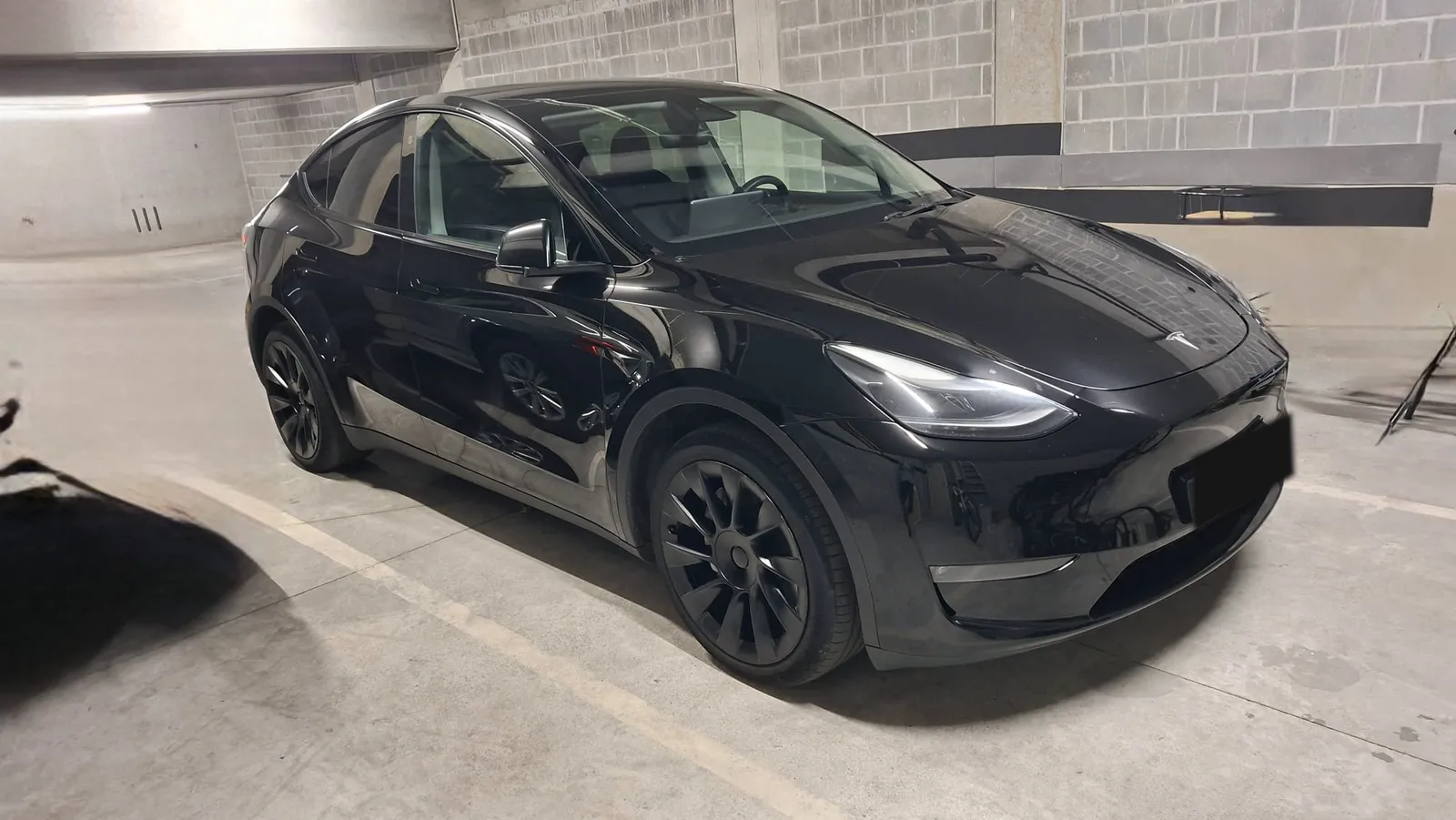
A quarter of a million kilometres is far beyond what most people expect a battery to handle. This Model Y has done it on its original pack, so we checked what's left. The answer: 84% of its original capacity, confirmed by Tesla's own in-car test.
What's left: 84%
The battery holds about 66.4 kWh today. Working back from 84%, it held roughly 78–79 kWh when new, so after more than 250,000 km it has given up around 12–13 kWh, about a sixth.
That's not the charge level: the car still charges to 100%, it's the 100% that has got smaller. In the same conditions, a full charge goes roughly 16% less far than when new. Day to day, speed, temperature and tyres make a bigger difference.
Is that good?
It's normal, and for a quarter of a million kilometres, normal is good news.
Tesla says so
After its in-car test, the car reported that the battery is “within the expected range based on its age and mileage.”
Well above the warranty
Tesla's battery warranty promises at least 70% for 8 years or 192,000 km. This car is 66,718 km past that distance and still 14 points above the minimum.
In line with Tesla's data
Tesla reports that Model S and X batteries lose about 12% on average after 320,000 km.[1] Different model and pack, but the same range.
The lesson for anyone looking at a used Tesla: the odometer alone tells you little about the battery. A car with 250,000 km can be in better shape than one with half that. The battery's own numbers are what count.
Two ways, one answer
We checked the battery twice, in two very different ways. First a KeyTelemetry report, which reads the estimate Tesla keeps in the background, took a few minutes. Then Tesla's Battery Health Test drained the battery to 0% and charged it back to 100%, which took most of a day. They landed less than one percentage point apart.
See how the report and Tesla's test compare, step by step →
The charger agrees
During Tesla's test, the car's own recharge from empty took 7 hours 46 minutes, and the charger recorded 68.1 kWh. That includes normal charging losses, so it isn't a capacity measurement in itself, but it fits a battery that holds about 66 kWh.
Buying a high-mileage Tesla? Check these
- A recent battery reading tied to the car. Look for the VIN, the date and the odometer on the document, and a way to verify it online.
- Warranty status, by time and distance. The battery warranty ends at whichever limit comes first. Past 192,000 km, a Model Y Long Range battery is no longer covered, so its condition matters more.
- Service history. Tesla's service records show what has been repaired or replaced, including any battery work.
- A test drive and a charge. Check that it charges normally and shows no battery warnings.